Plus
Plus

 Menu
Menu


O0 Design
January 08, 2025
Mindsparkle Mag


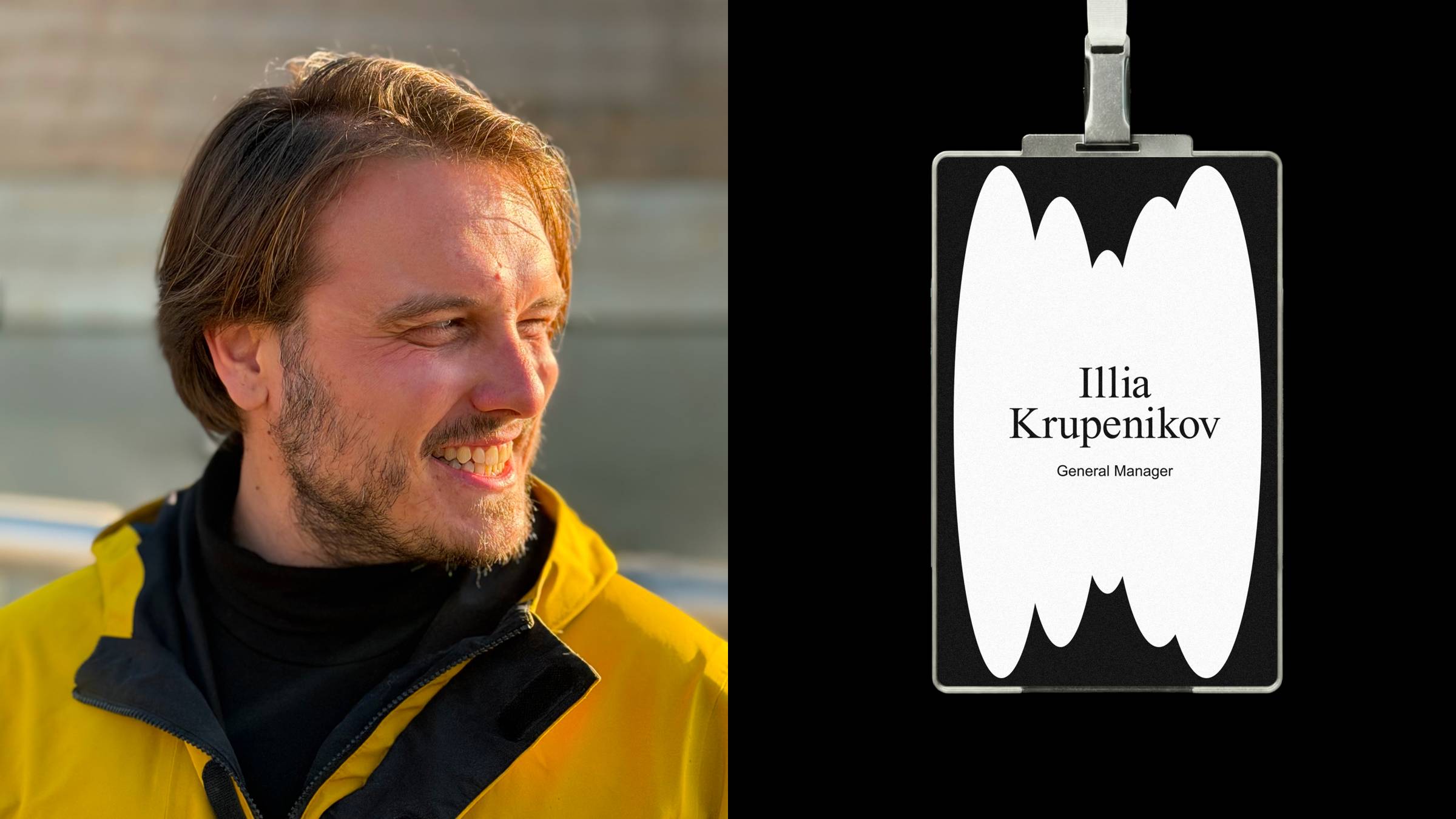
Today, the SF-based studio with Ukrainian roots partners with emerging startups and industry leaders like Google, Microsoft, HF0, and Toyota. O0's general manager Illia Krupenikov leads with a background in sales — and a conviction that design's greatest value lies not in what it makes, but in the results it enables.
We spoke with Illia about growing a studio through wartime, how product thinking shapes their approach to design, and how entering the industry as a non-designer changed the way he leads it.
✜ Let's rewind a bit. How did you join O0 and what's your current role?
→ I joined six years ago as General Manager, and I've been in the role ever since.
Back then, O0 was a team of four. We didn't set out to build a traditional agency — we were responding to founders who needed design that understood their business. Today, we're around 50 people across different time zones and continents, working on a diverse range of projects — from dating apps to aerospace companies.
My job is to make sure that as we take on bigger, more complex work, we don't lose that scrappy, day-one energy that got us here.
✜ O0 describes itself as a studio that designs products and brands them up. Where does one end and the other begin for you?
→ To us, a brand is a promise made, and the product is that promise kept. We don't see them as separate tasks; we see them as the "why" and the "how".
We usually start with a brand foundation because you need a clear point of view before you can turn it toward users. Once that's in place, the question becomes how it shows up — in the interface, on the site, in every place someone actually meets the company. That's where we take the brand and make it functional.
✜ You've been growing O0 while operating across countries during wartime. What does "normal work" even look like in that situation?
→ Shaping beauty and order while the world is falling apart is something you don't realize you can do until you're doing it.
In the first weeks of the full-scale invasion, business took a backseat to survival. We had team members in occupied zones and work happening from bomb shelters. But with chaos outside, we kept the studio highly organized. Not just for the business, but for our mental health. Routine provides stability in the middle of a crisis.
Once it became clear the war won't be short-term, we had to adapt quickly. When Russia started shelling Ukraine's energy infrastructure and blackouts became part of daily life, we helped our team build the setup needed to keep working. People adjusted workflows fast. Designers are trained to navigate ambiguity, and that turned out to be a more transferable skill than we expected.
O0 started during COVID, so we already had a fully remote operating model. That made it possible to keep quality and consistency.
✜ Has that reality changed your expectations of what actually matters in a project?
→ Absolutely. It sharpened our focus on what we call high-stakes design. We've leaned deeper into the defense and autonomy sectors, partnering with Ukrainian companies and Europe's first dual-use drone unicorn. When you're designing an interface for drone operations, the UX isn't just about ease of use, it's about split-second clarity in high-pressure environments. It's the ultimate validation of our product-first approach.
The same thinking sits behind Spend With Ukraine, our in-house initiative that highlights Ukrainian talent and products while supporting the creative economy. Beyond that, we donate 50% of our profits to organizations supporting Ukraine.
✜ People often talk about resilience in a very polished way. What's a part of that experience that isn't visible from the outside?
→ We call it "work-war balance". There are days with no electricity, no water, and no heat, but kids still need to go to school and daily syncs still happen. It's a surreal duality.
You have teammates who take tactical first-aid courses over the weekend and then lead design workshops on Monday. Assembling drones in their spare time and then jumping on a call with a partner to discuss typography or user flows. Sleep is often interrupted, air raids are frequent, but the work still gets done.
✜ You often work directly with product teams. At what point does design stop being a layer — and start shaping the product itself?
→ Design moves beyond aesthetics the moment it begins to dictate how a product actually functions. It happens as soon as we shift from asking "How do we present this?" to "Should this exist at all, and what is the clearest way for it to work?"
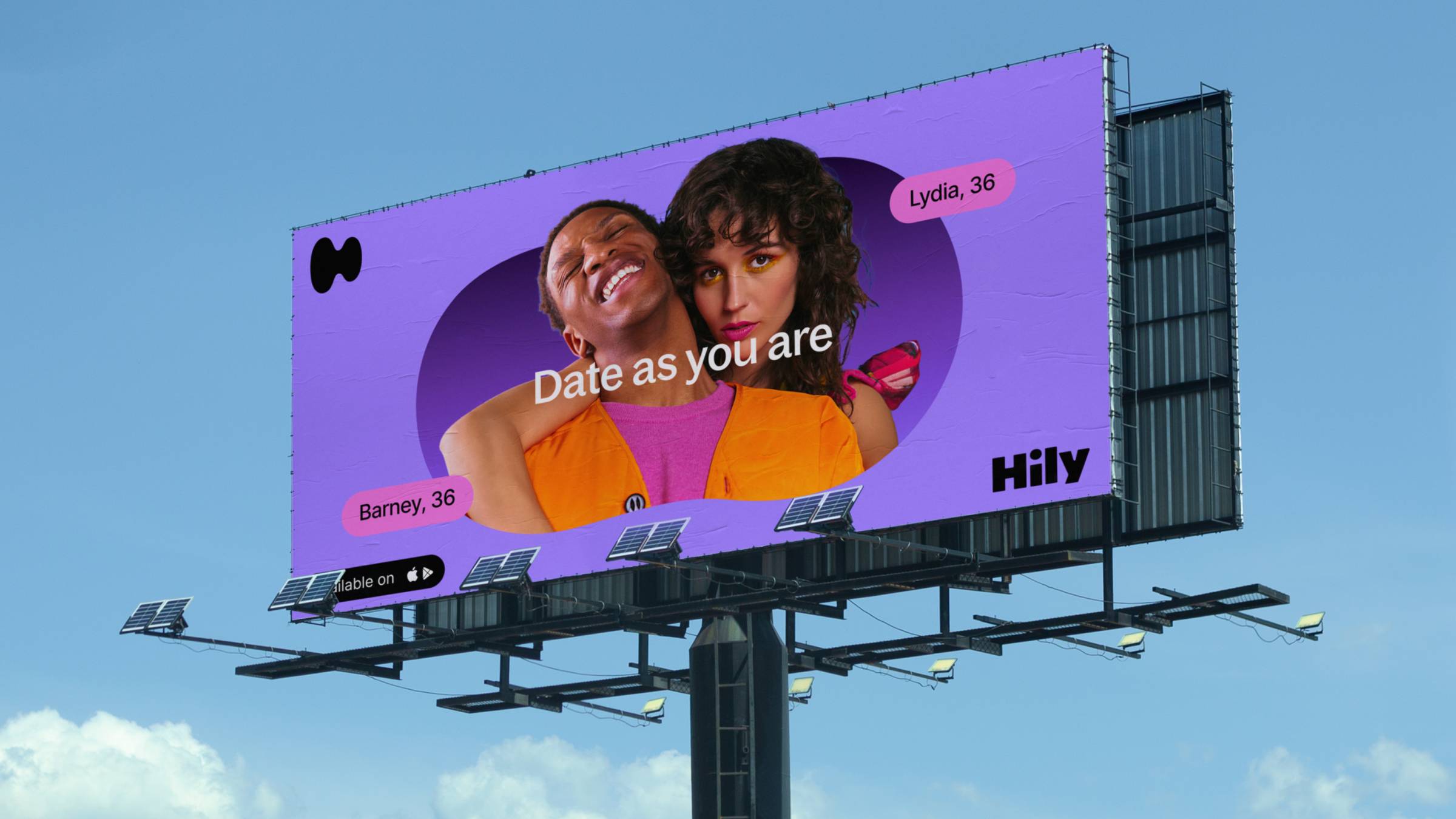
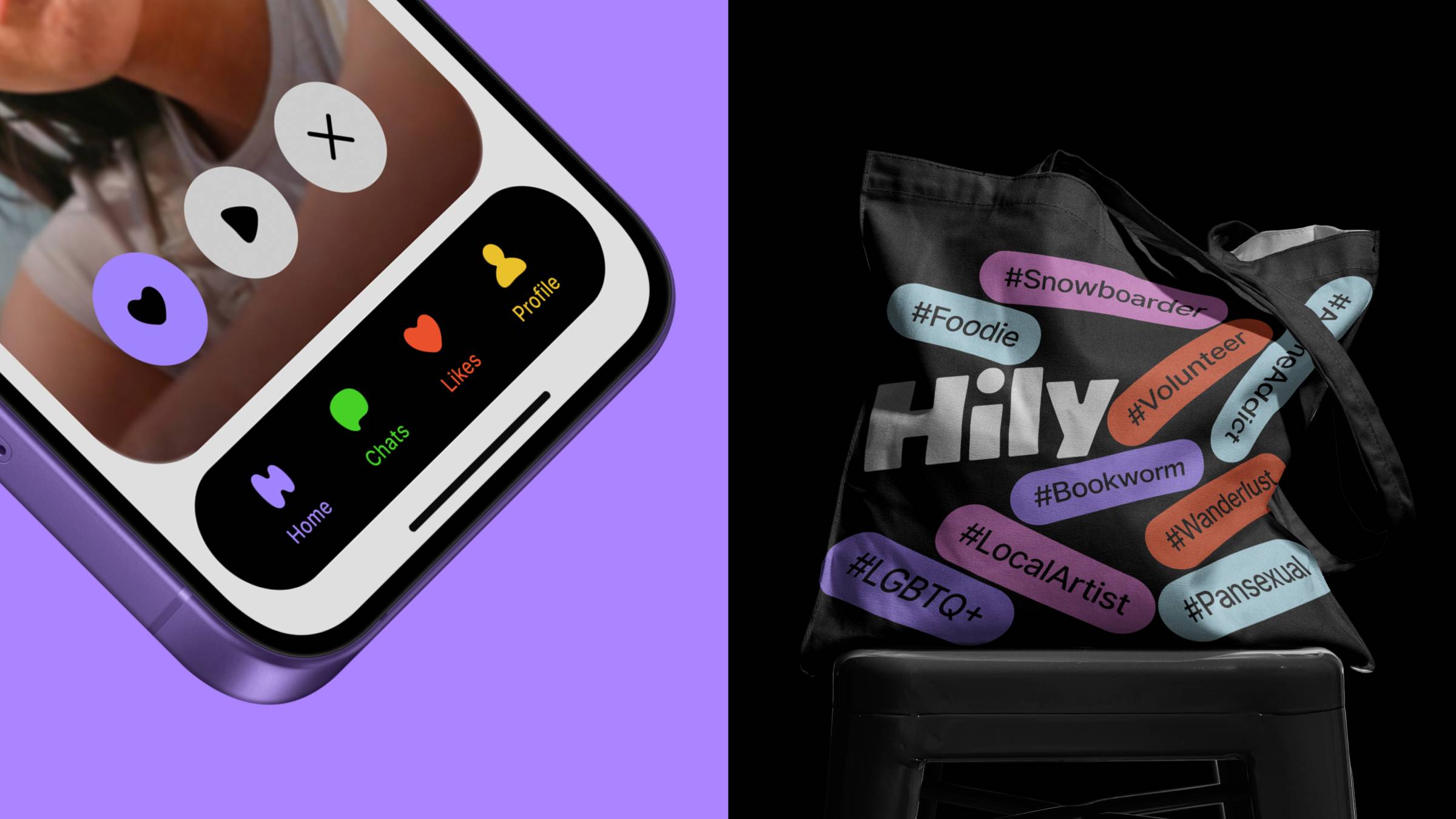
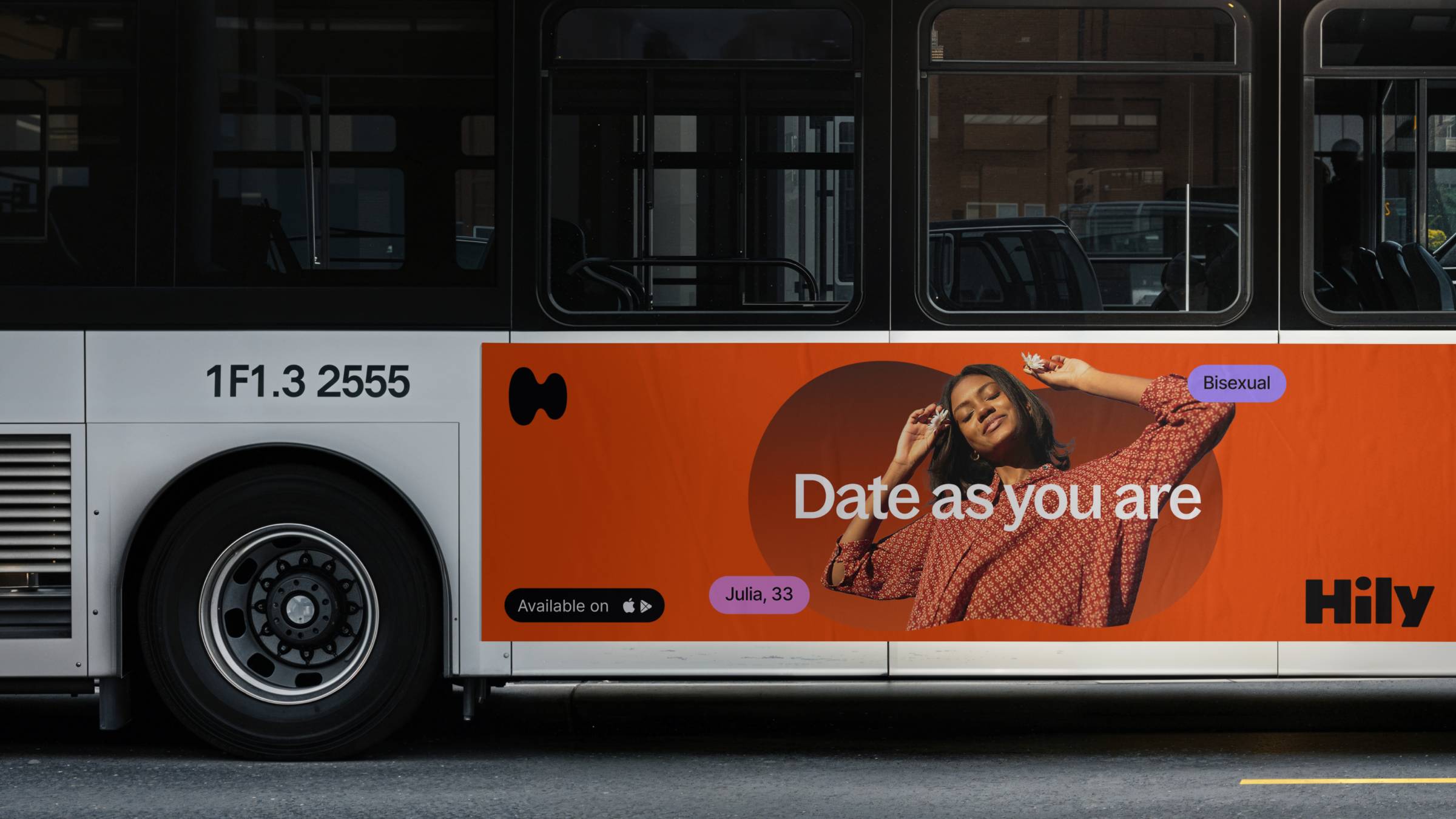
The Hily rebrand is a good example. It wasn't just a logo refresh; it rethought the online dating experience. By diving into the product, the data, and user behavior, we challenged the assumptions around perfection and pressure in dating. What came out of it was a philosophy of self-acceptance, inclusivity, and emotional honesty: You are enough.
Since the brand identity refresh, Hily has seen a 50% increase in App Store click-through rates, a 40% rise in organic installs, and took home a Red Dot.
✜ Many studios still focus on deliverables. Does that model still work for fast-moving companies — and how does your approach differ?
→ It depends on the asset. For something tangible like a brand system, discrete deliverables still have their place — but even then, we're obsessed with the problem they solve, not the file we're handing over.
For fast-moving teams, the deliverable model is dead. Priorities shift too quickly for that. The studios that actually make an impact act as an extension of the product team — collaborating and adapting in real time. That's how we operate. The approach comes from our roots in a YC startup: iterative, collaborative, transparent in how the work actually runs, not just in how it's pitched. No "take the brief, disappear for two months, then deliver something irrelevant."
✜ You've mentioned the idea of invisible work behind great design. What are the things people don't see — but everything depends on?
→ The final product is what people see. Everything that makes it possible is invisible.
Framing the real problem — not the one in the brief, but the one underneath it. Getting alignment across stakeholders who often disagree without realizing it. Cutting scope honestly, so the work that ships is the work that matters. Most of the trade-offs between user needs, business goals, and technical constraints happen in a meeting no one remembers. That's the difference between design that looks good and design that drives impact.
✜ Running a studio today seems as much about operations as it is about creativity. Has that balance shifted?
→ For O0, that balance never really shifted — we started with the structure baked in. Everything is measured, tracked, guided by metrics.
It sounds like the opposite of creativity, but it's what makes creativity possible. The operational backbone is what gives the team room to take real risks. Without a system that works, even the best ideas eventually fall apart.
✜ You come from a sales background rather than design. Where does that give you an advantage?
→ Coming from sales, I see the business impact behind design before I see the aesthetics. Most of my day is spent selling things without a literal price tag — intangibles like trust, market edge, and the risk of looking like everyone else.
When a partner pushes back on the investment, I frame it through the cost of the alternative: the high price of miscommunication, poor UX, or a disengaged audience. Internally, it works the same way. I help the team stay grounded, cut through doubt, and focus on what actually moves the business.
✜ Startups move fast, but good design takes time. How do you decide when something is "ready enough"?
→ It's a balance of pattern recognition and process. After years in the industry, your instinct for quality becomes calibrated enough that you know when the work has reached the necessary depth and when it hasn't.
But to keep pace with startups, we move in small, iterative steps instead of large milestones. Typically weekly sprints, sometimes two weeks. That allows us to stay aligned with the partner and lets us adjust quickly without dropping the quality bar.
✜ You're working with AI in both design and operations. Where has it actually changed your workflow — not just made it faster?
→ Everyone talks about AI in design, and that's fair. Although, the more interesting shift for us has been on the ops side.
We use it for financial forecasting and quarterly planning. It's also deeply integrated into our presales and lead gen. We even built a custom AI-powered CRM to manage our growth. It didn't make us faster at the same work — it changed what the work actually looks like.
✜ What still requires human judgment, no matter how good the tools get?
→ AI can do a lot, but it can't replace critical thinking. If you don't really know the subject, it can sound smart — but when you do, you see how often it makes mistakes.
The trick is to use it to explore and experiment, then step in to refine and iterate.
✜ O0 operates globally but has strong Ukrainian roots. How does that dual perspective influence the way you work?
→ Ukraine's work culture is incredibly high-standard and demanding. Every new hire, whether they're joining from Kyiv, Lisbon, or NYC, brings their own unique perspective and way of working.
That being said, we operate with a Bay Area approach: iterative, flexible, and product-focused. Combining both cultures gives us the rigor to deliver consistently while staying adaptive and collaborative across borders.
✜ Looking at your recent work — what changed internally that unlocked your next phase of growth?
→ A few shifts stand out. Moving from direct control to trust and delegation was a personal challenge, but it was the only way to unlock the studio's full capacity.
We also leaned more into high-stakes, face-to-face relationships. Remote work is our standard, but the biggest partnerships are still built in person. And we started showing up where designers usually don't — industry trade shows instead of design conferences — engaging with partners on their home turf. Early AI adoption played a role too. Pushing the team to integrate it before it was a trend gave us a real head start.
✜ What's a recent project that is very meaningful to you and why?
→ Definitely defense.
When we started the studio, it was actually one of the industries we deliberately avoided. But the context has changed. Today, it's not an abstract sector — it's directly connected to the safety of real people, including people around us. That's why we're very selective about the partners we work with. We choose companies whose technologies genuinely help Ukraine in this war. Against this backdrop, the work carries a very different weight for the team.
✜ The line between product, brand, and marketing is getting blurry. Where do you think design studios need to evolve next?
→ Many studios still think in terms of separate deliverables: a brand, a product, or a marketing campaign. But for most startups, the reality is different.
They don't need to know what their booth at CES will look like yet. They might not even get there. What they actually need is a fast launch and a way to be seen and heard in a crowded market. The studios that will remain valuable are the ones that help companies build one coherent system — where product, brand, and communication reinforce each other. That requires a real understanding of the partner's challenges. If a studio can't solve it, it's better not to take the project. At the end of the day, our value isn't in what we make, but in the results we enable.
✜ What's next for O0? What should we be looking for?
→ Depends on the horizon.
Short-term, a stronger presence in industry conversations and in the communities we work with. Long-term, the goal is simple: I'm building O0 to be one of those studios people recognize globally. Not bigger just for the sake of scale, but the first name that comes to mind when a founder has a real problem to solve.
Six years in, O0 has become something rare: a studio that thinks in systems, not deliverables — and in results, not outputs. What started inside a YC startup has grown into a 50-person operation trusted by some of the world's most demanding product teams, while remaining deeply rooted in the conviction that design only matters when it changes something real.
For Illia and the O0 team, the work and the stakes have only grown heavier — and more meaningful — with time. That combination of rigor, adaptability, and purpose is precisely what makes O0 worth watching.
Credits: O0 Design
Brand Identity & Product Design Studio: O0 Design
General Manager, O0 Design: Illia Krupenikov